2026-11-16
Learn chess strategies for beginners: five opening principles, the best simple opening, common mistakes to avoid and a 7-day practice plan, with free play against four computer levels, hints and undo in Chess Arena.
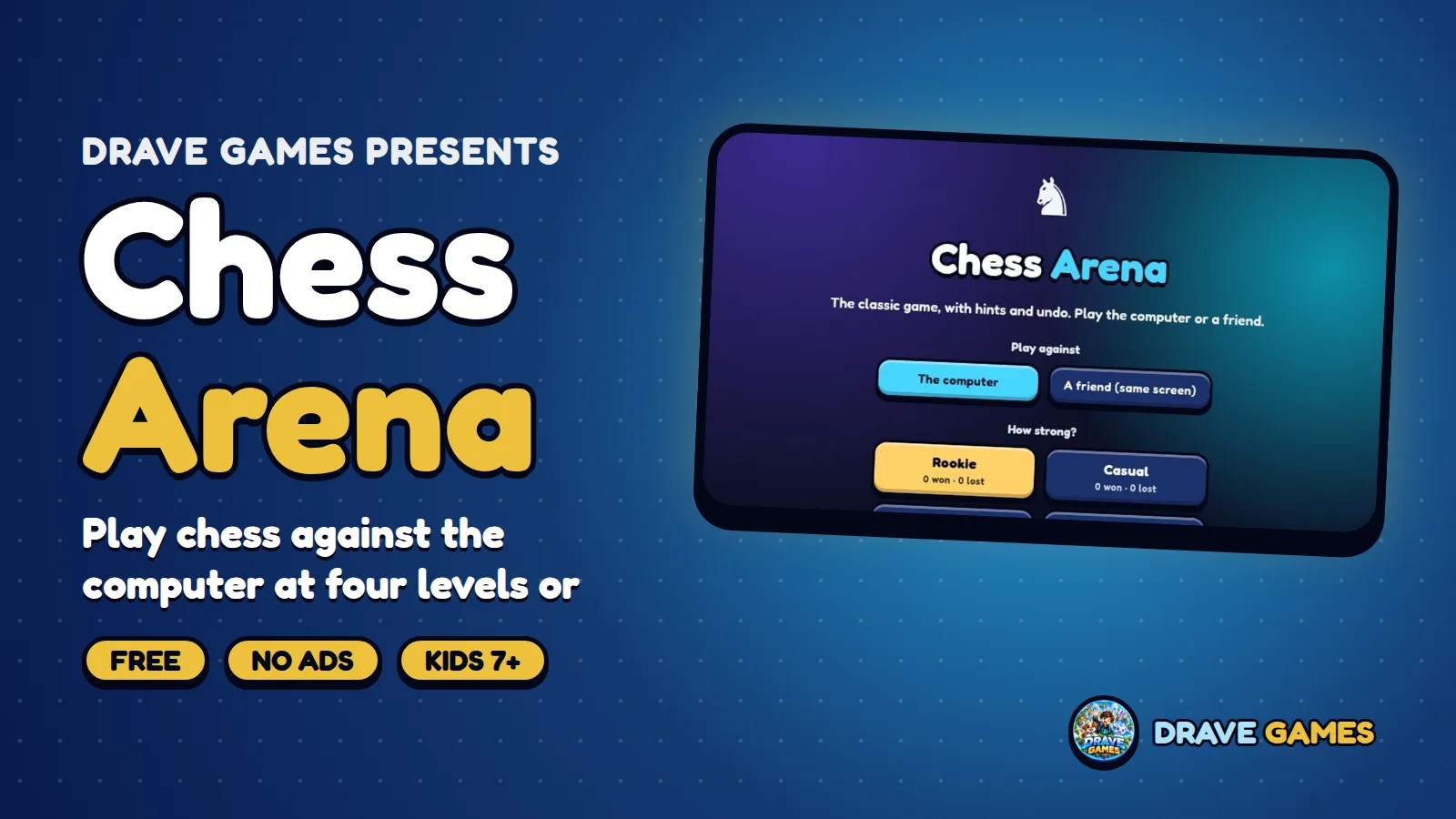
Chess strategies for beginners do not need years of study. Ten simple ideas, a calm board and a computer opponent that never gets tired are enough to turn a nervous first game into a confident one. This guide walks you through the best chess openings for beginners, the habits that win games and the mistakes almost everyone makes, and you can try every idea straight away in a free game of Chess Arena, right in your browser with no sign-up, no ads and nothing to download.
Chess is one of the oldest and most popular board games in the world, and it rewards exactly the skills that matter elsewhere: patience, planning and learning from a mistake. It is also fair. Both players start with the same sixteen pieces, so a win comes from thinking, not luck. Children, teens and adults can all enjoy it, and a game can last five minutes or an hour.
The hard part is the beginning. The rules look big, the board looks crowded and every opening book seems to be a hundred pages long. The good news is that a beginner needs only a handful of principles, and that is what this guide gives you.
1. Control the centre. Move a pawn from in front of your king or queen two squares forward (for example e4 or d4). Pieces in the middle of the board reach more squares.
2. Develop your knights and bishops early. Bring the minor pieces out before you move the same piece twice. Knights first, then bishops, is a good habit.
3. Castle early. Castling tucks the king behind a wall of pawns and brings a rook into play. Do it within the first ten moves.
4. Do not bring the queen out too soon. A queen in the middle of the board is a target; your opponent gains time by chasing her.
5. Make a threat or stop one every move. Before each move, ask one question: what does my opponent want to do next?
If you follow only these five, you already play better than many casual players.
Play the pawn in front of your king two squares forward. Then bring out your knight on the king's side, then the bishop next to it, and castle. That one plan works for either colour and teaches the basic shape of every good opening. When you feel ready, look at the classic ideas such as the Italian Game for White or a solid reply for Black, but you do not need to memorise a long list. Understanding *why* the moves are played is worth more than remembering them.
The best way to learn chess is to play, look at what went wrong and try again. Chess Arena is built for that. Tap a piece to see where it can go, so you never worry about an illegal move. Ask for a hint when you are stuck and read it as a lesson: why is that move good? Use Undo to take back a move and try the alternative, which is a great way to understand a mistake. The game includes every rule, castling, en passant, promotion, check and checkmate, so what you learn is the real game.
You can play the computer at four levels: Rookie, Casual, Club and Master. A good path is to play Rookie until you win comfortably, then move up one level. Your record against each level is kept on your own device, so you can watch yourself improve. You can also pass the screen to a friend or a parent for a game on one device, which is a lovely way to teach someone new.
Fifteen minutes a day is enough. Short, regular practice beats a long weekend session.
Chess is a favourite for school clubs because it needs no equipment beyond a screen, builds focus and teaches that a loss is a lesson. With Chess Arena there are no accounts to create and no personal data to manage, so a teacher or parent can start a game in seconds. It works on a phone, a tablet and a computer.
What is the best opening for a beginner? Control the centre with a pawn, develop the knights and bishops, then castle. The exact moves matter less than following the principles.
How do I get better at chess quickly? Play regularly, think about your opponent's threats, review your losses and learn basic checkmates.
Is Chess Arena free? Yes, it is free to play in your browser, with no sign-up, no chat, no ads and no purchases.
Can I play against a person? Yes, pass the screen to a friend, or play the computer at four levels.
Does it have all the rules? Yes, including castling, en passant, promotion, check and checkmate.
Can I take a move back? Yes, with Undo, and a hint is there when you are stuck.
Open Chess Arena, pick Rookie and play your first game with the five principles in mind. If you enjoy thinking games, try Sudoku Pals for logic or Color Clash for a quick family card game, and see everything in the Games section and Updates.
#DraveGames #ChessArena #Chess #ChessForBeginners #ChessOpenings #ChessStrategy #BoardGame #BoardGames #Strategy #FreeGames