2026-11-11
Safe Steps Island (Đảo An Toàn) is a calm free 3D game for teenagers with ten stations on online and real-life safety: messages from strangers, private photos, meeting in person, too-good offers and telling someone you trust.
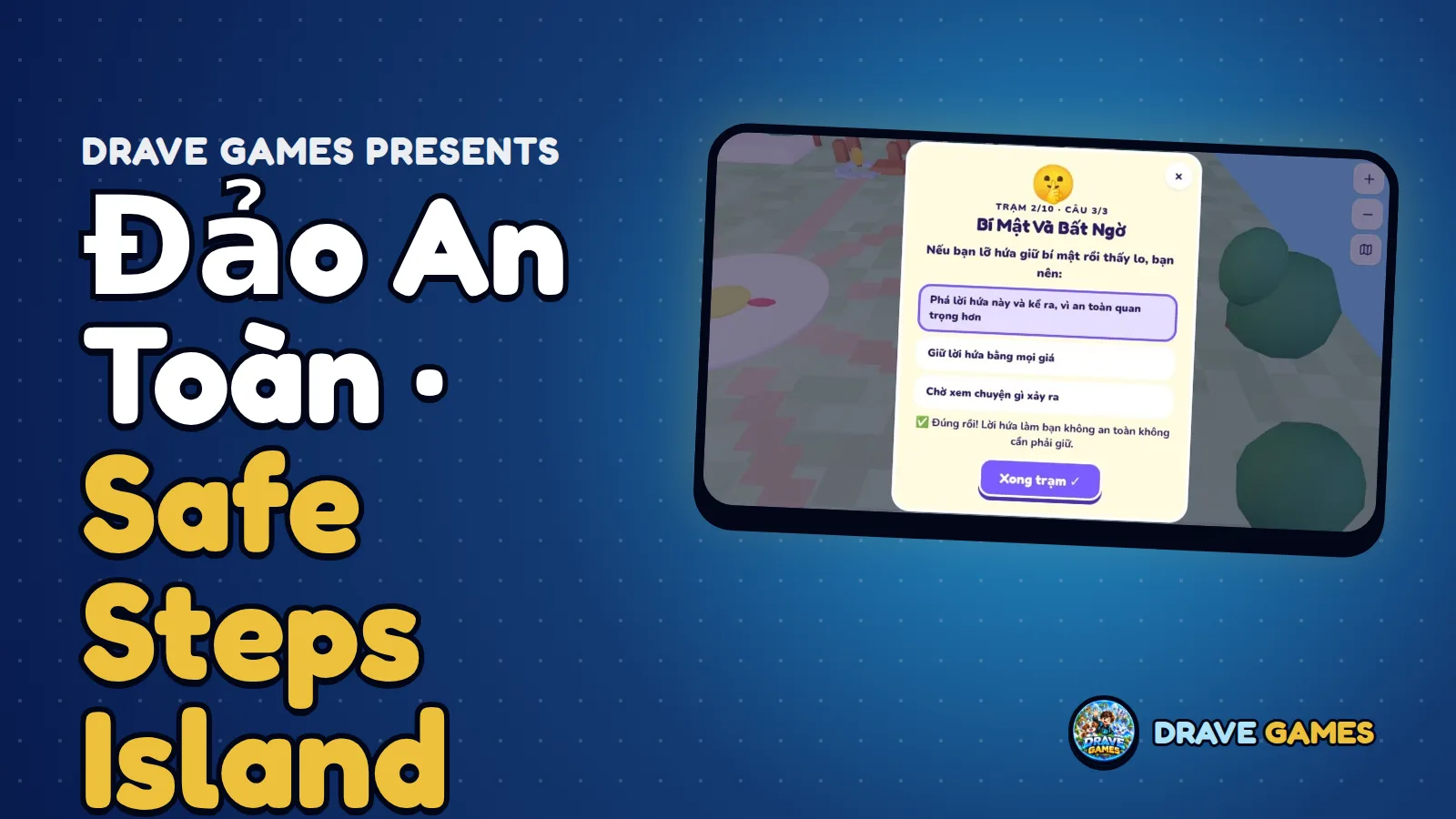
Đảo An Toàn · Safe Steps Island is a calm 3D island where ten stations teach teenagers how to notice lures, say no and tell someone they trust. It is never graphic and never blaming: if anything happens, it is never the young person's fault. It is free, in Vietnamese and English, with no chat, no account and no personal details collected.
A learning game for families and schools about staying safe online and offline. Teens walk around an island and visit stations, each focused on one situation and one skill. The tone is supportive and practical, with clear answers rather than scare tactics.
1. Messages From Strangers
2. Secrets And Surprises
3. Private Photos
4. Meeting In Person
5. Where You Are
6. The Family Code Word
7. Too-Good Offers
8. Trust Your Gut
9. If You Are Followed
10. Telling Is Always Right
After the walk, a test with one question from each station gives the right answer and the reason after every question. Teens see why an answer is safer, which is more useful than a plain score.
Friends can walk the same island in real time, and the host can start a knowledge race. There is no chat, no account, and no personal details are collected, so group learning stays safe.
The game shows Vietnam's free child protection line (111) and the police (113). A trusted adult, teacher or counsellor is always the best next step.
Teenagers, parents and schools who want a calm starting point for a conversation. It is a support lesson for families and schools, not a replacement for them. Play at the Safe Steps page.
Is it free? Yes.
Which languages? Tiếng Việt and English.
Will it blame the player? No. If something happens, it is never the young person's fault.
Is there chat? No, and no account is needed.
Who should I call for help? In Vietnam, 111 for child protection and 113 for the police. Elsewhere, use your local services.
Start by walking the island together rather than handing over a phone. Pick a station, let the teen read it, and ask what they would do before showing the answer. The aim is a conversation, not a lecture. Stations such as *Secrets And Surprises* and *Too-Good Offers* are good openers because they describe things that happen to many young people: a friend who asks to keep a secret, or a stranger offering a gift, a job or a prize that sounds too easy.
Agree on a family code word (the sixth station explains the idea) and talk about who the trusted adults are: a parent, a relative, a teacher, a school counsellor. The ninth station, *If You Are Followed*, and the tenth, *Telling Is Always Right*, close the loop: whatever happens, the next step is to tell someone.
A teacher can run the ten-question test as a discussion starter, with the host starting the knowledge race for a small group. Because there is no chat and no account, the lesson can be used in a classroom without collecting any personal details. After the test, take five minutes to ask what surprised students and which station they would explain to a younger sibling.
Safety lessons can accidentally make young people feel afraid or ashamed. Safe Steps Island is written the other way round: it names the tricks that people use, shows what a safer answer looks like and repeats that it is never the young person's fault. Nothing in the game is graphic. If a teen is already worried about something that has happened, the right step is not to finish a game but to talk to a trusted adult or call a help line.
For younger and older learners see Safe Quest 3D. More in the Games section and Updates.
#DraveGames #SafeSteps #OnlineSafety #ChildSafety #Education #TeenSafety #LifeSkills #3D #TiengViet #FreeGames